

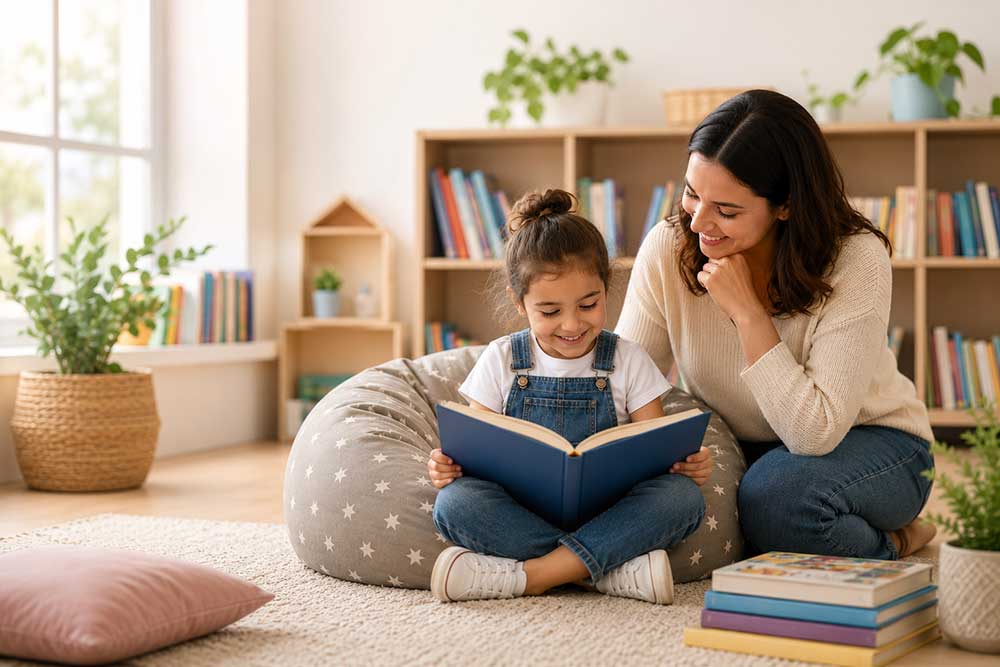
Reading is much more than an academic skill: it’s a gateway to imagination, knowledge, confidence, and lifelong learning. Yet many teachers and parents ask the same question: How can we help children enjoy reading?
The good news is that a love of reading isn’t something children are born with. It develops over time through positive experiences, engaging books, and an environment where reading is valued and celebrated.
Here are seven simple yet effective strategies to help children become enthusiastic, lifelong readers.
1. Choose Books That Match Their Age and Interests
Every child is unique, and so are their reading preferences. Some children are fascinated by adventure stories, while others are drawn to animals, science, humor, or everyday life. When books match a child’s interests and reading level, they are naturally more motivated to keep turning the pages. The goal isn’t to challenge children with difficult texts, but to spark their curiosity with stories they genuinely enjoy.
2. Make Reading an Enjoyable Experience
Reading should never feel like a chore. Whether at home or in the classroom, setting aside a few quiet minutes each day to enjoy a good book can make all the difference. The key is to create positive associations with reading, free from pressure or constant evaluation. When children see reading as a pleasurable activity, they are far more likely to make it a habit.
3. Keep Reading Aloud, Even After Children Learn to Read
Many people assume that reading aloud is only beneficial before children become independent readers. In reality, reading aloud continues to enrich vocabulary, improve listening comprehension, and stimulate imagination. It also exposes children to stories and language that may still be beyond their independent reading level. Sharing a story remains a meaningful experience at every age.
4. Lead by Example
Children learn by observing the adults around them. When they see parents, teachers, and caregivers reading books, talking about stories, or recommending their favorite titles, they begin to understand that reading is an enjoyable part of everyday life. A child who grows up surrounded by books is more likely to develop a positive relationship with reading.
5. Encourage Conversations About Books
Reading doesn’t end when the last page is turned. Invite children to talk about what they have read, share their opinions, imagine different endings, or describe their favorite characters. These conversations strengthen comprehension while developing communication skills, creativity, and critical thinking. Books become even more meaningful when they are shared.
6. Offer a Variety of Reading Materials
Picture books, novels, comics, informational books, children’s magazines, and digital books all have something valuable to offer. Providing a variety of reading formats keeps children engaged and allows every learner to discover the type of books they enjoy most. Diversity helps build confident and curious readers.
7. Celebrate Progress, Not Perfection
The objective isn’t to read faster, it’s to enjoy reading. Every finished book, every new word learned, and every thoughtful question asked is an important milestone in a child’s reading journey. By celebrating effort instead of performance, we help children build confidence, motivation, and independence.
The School’s Role in Building Lifelong Readers
Schools play a vital role in helping children discover the joy of reading. By offering diverse texts, interactive learning experiences, and meaningful discussions, teachers create classrooms where books become powerful tools for learning and personal growth. Reading doesn’t simply improve language skills, it also nurtures curiosity, imagination, creativity, and critical thinking across every subject.
At Hachette Antoine Education, We Believe Every Child Deserves to Love Reading
At Hachette Antoine Education, we design educational resources that inspire children to discover the joy of reading from their earliest school years. Our collections feature age-appropriate texts, engaging comprehension activities, and carefully designed teaching resources that support educators while helping students become confident, curious, and motivated readers.
A love of reading doesn’t happen by chance. It grows through the stories we share, the books we discover, and the adults who inspire children to read. Because a child who loves reading is a child who learns with curiosity, confidence, and joy.