

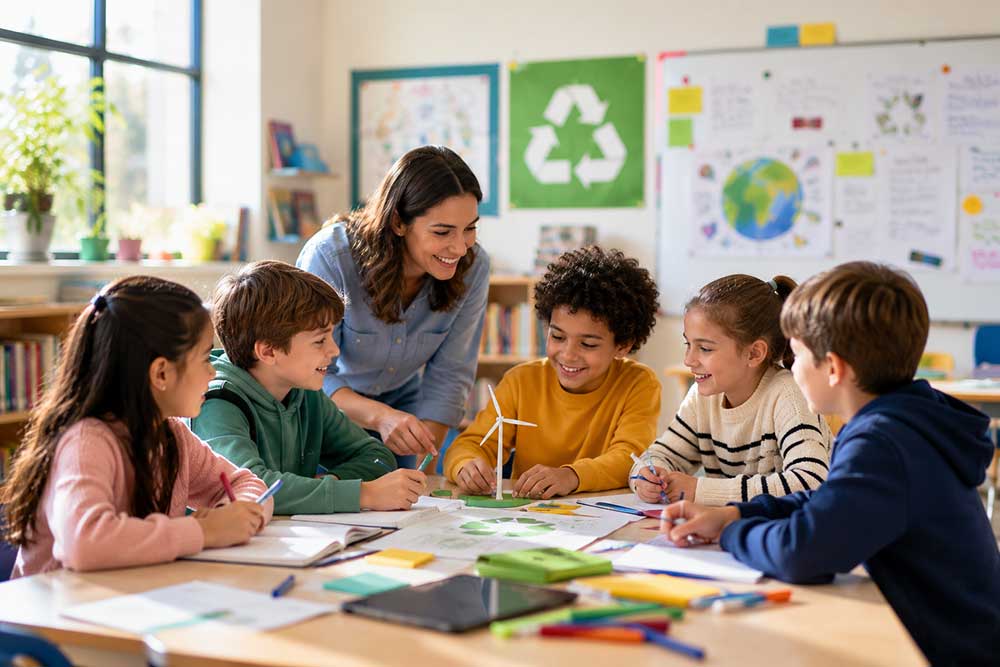
The days when students sat quietly listening to their teacher for an entire lesson are gradually evolving. Today, educational research consistently shows that meaningful learning happens when students actively participate in the learning process. Observing, experimenting, creating, collaborating, asking questions, and solving problems all help students become active participants rather than passive recipients of knowledge. But what exactly is active learning, and why has it become such an essential part of today’s classrooms?
Learning by Doing
Active learning is based on a simple idea: students learn best when they actively engage with what they are learning. Instead of simply receiving information, they are encouraged to explore, test ideas, discuss with their peers, and gradually build their own understanding. This hands-on involvement leads to deeper comprehension and longer-lasting learning.
Building Independence
When students are encouraged to make decisions, solve problems, and take initiative, they develop confidence and independence. They learn how to organize their thinking, evaluate different approaches, and become increasingly responsible for their own learning journey. These skills extend far beyond the classroom and prepare them for lifelong learning.
Encouraging Collaboration
Learning is often more meaningful when it is shared. Collaborative activities allow students to exchange ideas, listen to different perspectives, communicate effectively, and work together toward a common goal. Through teamwork, they also develop essential social and interpersonal skills that are increasingly valuable in today’s world.
Sparking Curiosity
Children learn best when they are curious. A challenging question, a scientific experiment, an educational game, or a real-world problem can inspire students to investigate, ask questions, and search for answers. Curiosity fuels motivation and transforms learning into an exciting process of discovery.
Making Learning Meaningful
Students remember concepts more easily when they understand why they matter. By connecting classroom activities to real-life situations, meaningful projects, or authentic experiences, teachers help students see the purpose behind what they are learning. Education becomes less about memorizing information and more about understanding, applying, and transferring knowledge.
The Teacher’s Role
Active learning does not reduce the importance of the teacher, it transforms it. Teachers become facilitators who guide discussions, encourage inquiry, support collaboration, and create learning environments where students feel confident exploring new ideas. Rather than simply delivering information, they empower students to become active, engaged learners.
At Hachette Antoine Education, We Believe in Active Learning
At Hachette Antoine Education, we develop educational resources that place students at the center of the learning experience. Our collections include engaging activities, collaborative projects, inquiry-based tasks, and thoughtfully designed learning experiences that foster participation, curiosity, creativity, and independence.
Learning is much more than listening. It is exploring, questioning, creating, collaborating, and discovering. When students become active participants in their education, they don’t simply acquire knowledge, they develop the confidence, skills, and mindset they need to continue learning throughout their lives.